Stainless Steel vs. Nonstick Cookware: Which Wins?

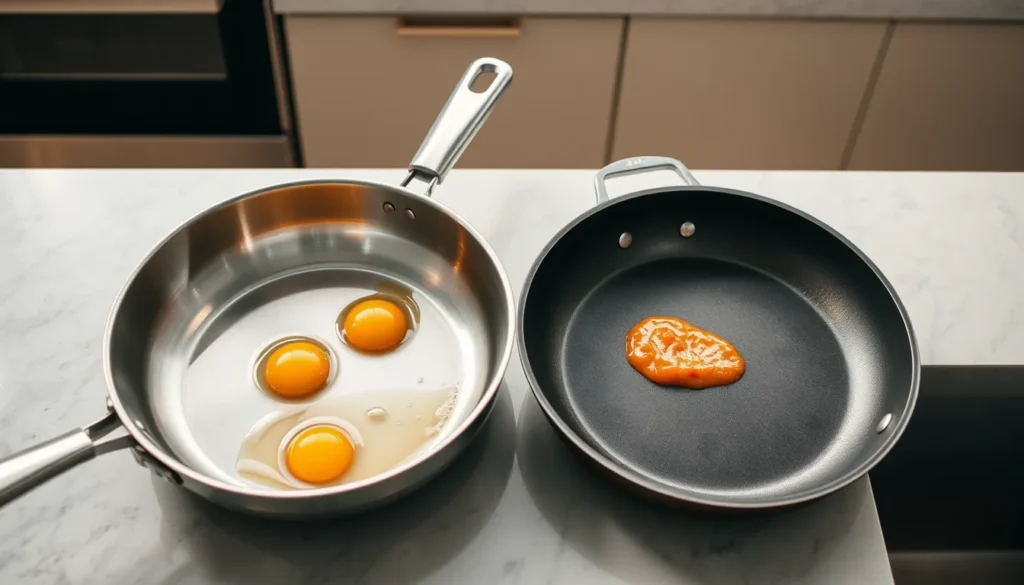
If you are tired of scrubbing stuck-on food or dreading a scratched pan, this comparison cuts through the marketing noise. We focus on daily usability, maintenance effort, and long-term durability to help you match cookware to your actual habits. Whether you prioritize effortless cleanup for weeknight meals or the robust performance needed for high-heat searing, understanding the trade-offs is key.
This guide breaks down Stainless Steel versus Nonstick Cookware from a practical standpoint. We examine how each handles common tasks like scrambling eggs or deglazing sauces, how much time they demand in the sink, and how they hold up over years of use. By focusing on real-world performance rather than just material specs, you can identify the right set for your specific cooking style and maintenance tolerance.
Core Differences: Material and Function
Stainless Steel cookware is constructed from a single, solid metal alloy. It has no additional layers, meaning the surface you cook on is the same material forming the walls. This solid structure provides high Thermal Mass, allowing the pan to retain heat steadily even when you add cold ingredients. Because the surface is porous metal, food naturally bonds to it if moisture evaporates too quickly. This characteristic makes it ideal for browning, but requires technique to prevent sticking.
Nonstick Cookware, by contrast, is usually made from aluminum or steel underneath a thin layer of Polymer Coating. This coating is designed to be chemically inert and smooth. When food touches the surface, friction is significantly reduced, allowing items like eggs or fish to slide off effortlessly with minimal oil. However, the coating itself is not the primary heat conductor; it relies on the metal base beneath to distribute heat. This means the surface behaves very differently from the solid metal of Stainless Steel, prioritizing release over direct contact.
Cooking Performance: Searing, Scrambling, and Deglazing
That distinction dictates which pan wins specific tasks. For high-heat searing, Stainless Steel is the clear choice. It tolerates intense temperatures without degrading, allowing you to create a deep, browned crust on steaks or chops. This Maillard reaction builds fond—those flavorful browned bits stuck to the pan. You can deglaze directly in the same vessel, scraping the fond into a wine or stock mixture to create a rich sauce. Nonstick Coating cannot handle this level of heat. Exceeding its safe temperature range causes the coating to break down, potentially releasing fumes and ruining the surface. It is not designed for developing complex flavors through direct, high-heat contact.
Conversely, for delicate foods like eggs, fish, or pancakes, Nonstick Cookware excels. These items require low heat and minimal fat to prevent sticking. The low-friction surface allows them to slide off effortlessly, preserving their fragile structure. Attempting to sear in a nonstick pan results in a pale, undercooked exterior because you cannot push the temperature high enough. Using Stainless Steel for scrambling eggs requires more technique, precise heat management, and often more fat to achieve similar release. If your routine involves frequent high-heat cooking and sauce-making, Stainless Steel performs better. If your kitchen life centers on breakfast and light, delicate meals, Nonstick is the practical tool for the job.
Maintenance and Cleaning Effort
The daily reality of caring for your pans differs significantly between these two types. Nonstick Coating offers immediate convenience. After cooking, you can often wipe the surface clean with a paper towel or a quick rinse. However, this ease is fragile. You must strictly use wood or plastic utensils to prevent scratching. Furthermore, if the coating chips or wears, hand washing is mandatory to avoid further degradation. Dishwashers can accelerate this wear, so check your manufacturer’s guidelines carefully.
Stainless Steel is hardy but labor-intensive when food sticks. You can scrub it with metal brushes and place it in the dishwasher without fear of damaging the finish. Yet, removing burnt-on residue requires technique. Soaking the pan in warm, soapy water is the first step. For stubborn stains, boiling water with a splash of vinegar or applying a baking soda paste helps lift the debris. This process takes time, but the pan’s durability means it withstands these methods indefinitely.
Ultimately, Nonstick provides speed at the cost of fragility. Stainless Steel demands patience and effort in exchange for long-term resilience. Choose based on whether you value a quick wipe-down or a pan that survives aggressive cleaning.
Durability and Long-Term Value
While Nonstick Coating offers immediate convenience, its lifespan is finite. The surface degrades with heat and utensil contact, typically requiring replacement after a few years of regular use. Once the coating chips or scratches, the pan loses its primary function and becomes a disposal item. You cannot repair a compromised Nonstick surface.
Stainless Steel operates on a different timeline. A high-quality set can last decades, even generations, provided it is not subjected to extreme thermal shock. Instead of discarding a worn pan, you can restore its performance. Minor discoloration responds to polishing, and dried-on food can be removed without altering the metal’s integrity. In some cases, you can re-season specific stainless surfaces to improve non-stick properties, though this is less common than with cast iron.
Consider the cost-per-use calculation. Buying a new Nonstick pan every three to five years accumulates significant expense over a lifetime. Conversely, investing in one durable Stainless Steel set spreads the initial cost over many decades. The Stainless Steel pan remains functional long after its Nonstick counterpart has been replaced multiple times. If you view cookware as a long-term asset rather than a disposable tool, the durable option offers superior value. The ability to maintain and revive Stainless Steel ensures it remains a viable part of your kitchen for years, whereas Nonstick items eventually require full replacement.
Health and Safety Considerations
When evaluating Stainless Steel vs. Nonstick Cookware, safety often hinges on how you use the tools. Stainless Steel is chemically inert, meaning it does not leach metals or react with acidic ingredients like tomatoes or wine. This makes it the default safe choice for high-heat searing or deglazing, where temperatures exceed the limits of coated surfaces.
Modern Nonstick Coating, particularly those free of PFOA/PFAS, is generally safe for everyday cooking at low to medium heat. The critical risk arises from overheating. If a Nonstick pan gets too hot, the coating can break down and release fumes that may irritate the respiratory system. To maintain a safe environment, avoid preheating an empty Nonstick pan and never use it for deep-frying or high-heat searing.
Your cooking habits dictate the safer option. If you frequently stir-fry or use charring techniques, the thermal stability of Stainless Steel eliminates the risk of fume emission associated with exceeding Nonstick temperature thresholds. For gentle tasks like scrambling eggs or boiling pasta, a well-maintained Nonstick pan poses minimal health concerns. Always monitor heat levels; if you see smoke, reduce the temperature immediately. This simple practice ensures that both material types serve your kitchen safely without compromising food quality or air quality.
Choosing the Right Set for Your Kitchen
- Quick breakfasts and minimal cleanup: If your routine centers on scrambled eggs, pancakes, or simple sautés, Nonstick cookware is the practical choice. The Nonstick Coating prevents sticking, requiring little oil and significantly reducing scrubbing. It is ideal for households where speed and low-effort maintenance are daily priorities.
- Browning, searing, and pan sauces: Choose Stainless Steel if you frequently make deglazed sauces, braise, or sear meats. Its high Thermal Mass allows for even heat distribution and the necessary high temperatures to develop flavor without damaging the surface. This material offers superior long-term durability and can endure metal utensils and abrasive cleaning methods.
Many cooks adopt a hybrid approach to cover all bases. A single Nonstick skillet handles delicate proteins and breakfast items efficiently, while a Stainless Steel pan serves as the workhorse for general cooking, browning, and sauce-making. This strategy ensures you have the right tool for each task without overcommitting to one material’s limitations.
Assess your actual cooking habits rather than theoretical preferences. If you rarely cook at high heat, the durability benefits of Stainless Steel may be less critical than the convenience of Nonstick. Conversely, if you cook frequently and value longevity, investing in Stainless Steel reduces the need for frequent replacements. Match the cookware to the specific dishes you prepare most often to maximize performance and minimize daily hassle.
